


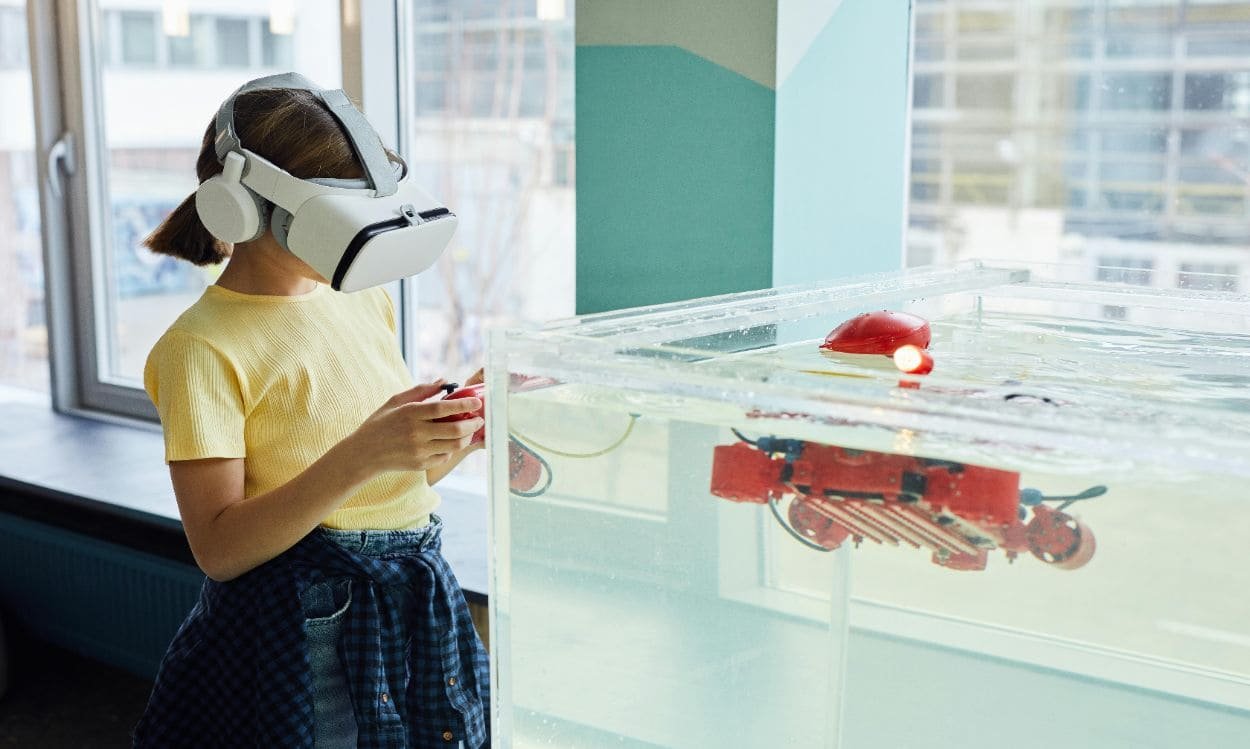
Students learning in a 3D virtual classroom using VR headsets and avatars
Discover How the Metaverse is poised to transform education, from immersive virtual classrooms to global learning experiences. Here’s what the future looks like.
Introduction
How the Metaverse Will Change Education Forever ?Imagine logging into class and walking through the pyramids of Egypt, attending a physics lecture on the moon, or collaborating with classmates from five different continents—all without leaving your bedroom.
That’s not science fiction anymore.
It’s the metaverse—a digital universe of virtual spaces where users interact using avatars, VR (virtual reality), and AR (augmented reality) technology.
While the metaverse is still developing, it’s already clear:
This technology will completely reshape the way we learn.
In this article, we’ll explore how the metaverse will change education forever, the benefits and challenges it brings, and why students and educators should prepare for it right now.
What is the Metaverse?
The metaverse is a virtual world where people can interact, socialize, work, and study using digital avatars. It blends technologies like:
- Virtual Reality (VR) – immersive 3D worlds via headsets
- Augmented Reality (AR) – digital elements overlaid on the real world
- Blockchain – for secure identity and ownership
- Artificial Intelligence (AI) – to personalize learning experiences
Think of it as a 3D internet—but one where you’re inside the experience, not just reading or watching it.
Companies like Meta (Facebook), Microsoft, and Roblox are already investing billions into creating metaverse platforms. But education may be the area where this tech makes the biggest impact.
Traditional Classrooms vs Metaverse Learning
Let’s compare the current education model with what the metaverse can offer:
| Traditional Education | Metaverse Education |
| Physical classrooms | Virtual, 3D learning environments |
| Limited by location | Global, borderless classrooms |
| Books, slideshows | Interactive 3D simulations |
| Lectures | Hands-on, gamified learning |
| Standardized pace | Personalized, adaptive pace |
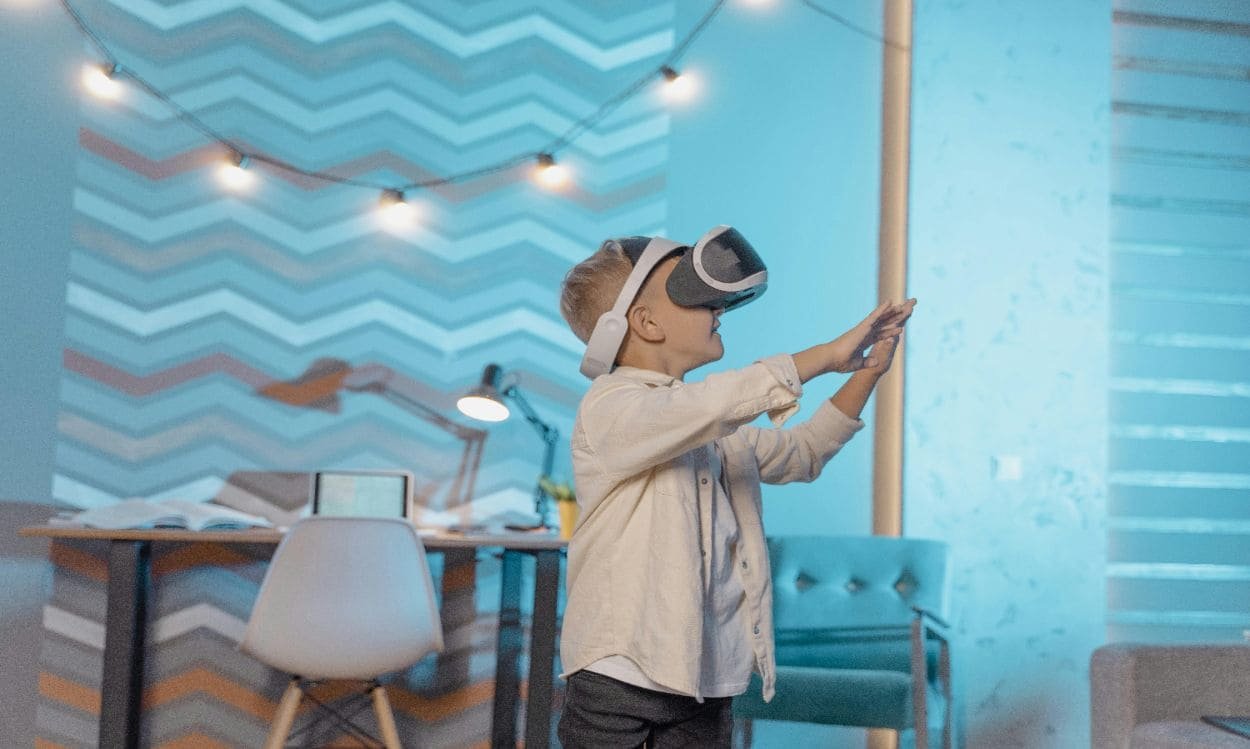
7 Ways the Metaverse Will Transform Education
1. Immersive Learning Experiences
In the metaverse, learning isn’t just watching—it’s doing.
Example:
A biology class won’t just look at a diagram of the human heart—they’ll walk through it, see how it pumps blood in real-time, and interact with each part.
Subjects like history, science, and art become living experiences. Imagine:
- Touring Ancient Rome during Caesar’s time
- Exploring deep-sea ecosystems in a marine biology class
- Practicing chemistry safely in virtual labs
This kind of learning helps students understand faster and remember longer.
2. Global Classrooms Without Borders
In the metaverse, your classmates might be from India, Brazil, or Japan—all sharing the same virtual classroom.
This creates:
- Cultural exchange and global collaboration
- 24/7 access to lessons from any time zone
- A sense of inclusion, especially for students in remote areas
Education becomes truly international—not just in theory, but in practice.
3. Safe Practice for Real-World Skills
Students can practice dangerous or expensive tasks in a safe virtual environment, like:
- Medical students doing surgeries
- Engineering students building bridges
- Aviation students flying planes
They can fail, retry, and learn—without risk.
This leads to better-trained graduates with real experience before stepping into real jobs.
4. Personalized Learning with AI Integration
AI in the metaverse can track a student’s pace, strengths, and weak points.
The system can then:
- Suggest lessons tailored to the learner
- Offer real-time feedback
- Recommend additional resources
No more one-size-fits-all learning.
Every student gets their own personalized classroom experience.
5. Gamification & Motivation
Learning in the metaverse feels like playing a video game.
Students earn:
- Badges for completing lessons
- Points for group collaboration
- Virtual trophies for creativity or innovation
Gamified learning increases student engagement, especially for younger learners who are already used to digital games and social platforms.
6. Virtual Internships and Career Training
Companies are starting to host virtual internships in the metaverse.
This gives students:
- Work experience from anywhere
- Real-time mentorship and training
- Networking opportunities across industries
College students can intern in Silicon Valley—while living in Africa or Europe.
7. Learning Accessibility for All
The metaverse can help students with:
- Physical disabilities who can’t attend traditional classes
- Anxiety or mental health challenges
- Limited financial resources who can’t travel
Everyone gets the same high-quality education experience—regardless of background.
Challenges We Must Prepare For
While the benefits are exciting, the metaverse also brings serious challenges.
1. Access & Equity
VR headsets, fast internet, and devices are still expensive.
Poorer communities may be left out unless governments and schools step in.
2. Privacy & Security
Student data could be at risk in virtual platforms.
We’ll need strong privacy laws, encrypted networks, and ethical standards.
3. Mental Health Concerns
Too much time in virtual spaces can cause:
- Disconnection from reality
- Eye strain & fatigue
- Social isolation if not balanced
Teachers and parents must ensure students still build real-world skills and relationships.
4. Teacher Training
Most educators aren’t trained in VR or metaverse tools.
Massive investment in teacher development will be needed to make this transition smooth.
Real-World Examples Already in Action
- Roblox Education is building a metaverse platform for coding and creativity.
- Meta’s Horizon Workrooms lets students and teachers meet in virtual offices.
- Engage VR is used by universities to deliver lectures in fully immersive 3D spaces.
Even Harvard, Stanford, and Oxford are testing virtual campuses.
Final Thoughts
The metaverse won’t replace schools—but it will redefine them.
In the next 5–10 years, logging into class could feel like stepping into a new planet.
Teachers will become experience designers, and students will be explorers of knowledge in a world without physical limits.
The question is no longer if the metaverse will change education, but:
Are we ready for it?
Frequently Asked Questions
Will the metaverse replace physical schools?
Not entirely. It will supplement traditional learning with immersive experiences, especially in hybrid or online education models.
Is the metaverse safe for students?
With proper privacy settings, moderation, and ethical design, it can be safe. Schools must set digital boundaries and safety measures.
How can schools start using the metaverse?
Start small: virtual classrooms, 3D learning platforms like Engage, or VR labs. Gradually train teachers and build infrastructure.
Not entirely. It will supplement traditional learning with immersive experiences, especially in hybrid or online education models.
With proper privacy settings, moderation, and ethical design, it can be safe. Schools must set digital boundaries and safety measures.
Start small: virtual classrooms, 3D learning platforms like Engage, or VR labs. Gradually train teachers and build infrastructure.


About Er. Harish Singh
Er. Harish Singh is the founder of newsedunerd.com, a Blog focused on Smart News, Education, Finance, and Future Tech. With an Engineering background and a passion for Digital learning, Simplifies complex topics like AI, Stock Markets, and Student Tools for everyday readers. I believe in making knowledge easy, useful, and accessible for all.


